It's amazing what one can find in forgotten boxes in the attic. During a recent move, I uncovered this framed news clipping, given to me by a relative:
As the Milwaukee Sentinel reported on October 29, 1929:
The four flyers of the Russian plane, "Land of the Soviets", were greeted Monday by Henry Ford after their arrival from Chicago at the Ford Airport at Dearborn. The automobile manufacturer congratulated them on their achievement in conquering the storms of the northern Pacific ocean and placed the facilities of his airport at their disposal.
The Soviet airmen were guests of the engineering department of the Ford Motor Company at a luncheon in the engineering laboratories.
Monday it was announced they would continue the tourney to New York Wednesday morning. Meanwhile they will be feted by various Slavish organizations of Detroit. They will be presented with ten farm tractors which will be shipped to Russia to be used in cultivating the soil of the soviet union.
More than 5,000 persons were at the airport when the plane arrived.
Wednesday, June 8, 2011
Monday, May 30, 2011
Cessna T-128T Caravan
It seems there could be a new military designation for the Cessna Caravan. Flightglobal reported that Cessna has won a USAF counter-insurgency contract for six Cessna T-128T and 26 Cessna 208B Caravans to be delivered the Afghanistan air force.
While the designation may be new, military Caravans certainly are not:
(images courtesy USAF)
While the designation may be new, military Caravans certainly are not:
(images courtesy USAF)
Thursday, May 26, 2011
Mystery Prop
I need help identifying this propeller. It was originally covered in a black rubbery coating. That coating was stripped off, and this is what it looks like now:
Any guesses as to what aircraft type it might have come from?
Sunday, May 22, 2011
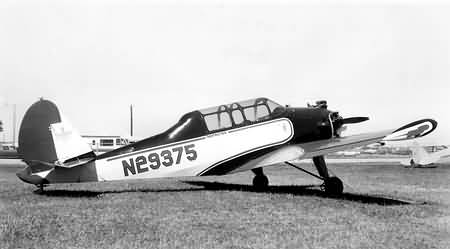
Waco RPT

Now that the 2011 Nationals test has been revealed, I can share my Waco RPT photo shoot. The RPT competed for a US military contract in the early 1940s and lost. The sole example was originally built with an open cockpit. A later owner added the canopy. The aircraft has only 85 hours total time and has rarely ventured out of a hangar. It is currently offered for sale on Controller.com for $57,900.
Prior to spring of 2011, only one or two photos of the RPT existed on the web. This was one of them, shot at Oshkosh sometime in the 1970s or 1980s:
After tracking down the owner, I managed to get permission to do a full photo shoot. It can be seen here.
Thursday, May 5, 2011
Railroad 737s
Let's face it - airports aren't becoming any friendlier toward photographers. Carry a DSLR up to an airport boundary fence, and you'll be descended upon and discriminated against faster than you can say "civil liberties". But there are still a few places where you can photograph brand-new 737s without being treated like a felon.
Seattle is one of those places.
Take a walk down 20th Avenue West over by Interbay, and you will occasionally run across views like this:
Here's the Google Street View link.
You can also get some decent shots from the other side of the tracks. Just head to Interbay Golf Center on 15th Ave West:
And always travel with your camera. As Airliners.net photographer Dave Lednicer demonstrates HERE, you can find the 737 fuselages enroute between Wichita and Renton.
Seattle is one of those places.
Take a walk down 20th Avenue West over by Interbay, and you will occasionally run across views like this:
Here's the Google Street View link.
You can also get some decent shots from the other side of the tracks. Just head to Interbay Golf Center on 15th Ave West:
And always travel with your camera. As Airliners.net photographer Dave Lednicer demonstrates HERE, you can find the 737 fuselages enroute between Wichita and Renton.
Monday, May 2, 2011
In Pursuit of Jane
As NIFA Aircraft Rec competitors know, Jane's All the World's Aircraft is the official source for judging.
As NIFA Aircraft Rec competitors also know, those big fabric-bound books can be horrendously expensive.
A few years back, I hit the jackpot. Just before driving through Chicago enroute to family Christmas in Michigan and on a whim, I performed a certain Chicago Craigslist search. Turned out, a small library was interested in selling their huge collection of used Jane's yearbooks for what amounted to about $10 each.
A quick phone call and a few hours later, this was the result:
I consider myself extremely fortunate to have scored a collection that includes half of the 1950s, almost all of the 1960s, 1970s, and 1980s, and some of the 1990s. But it actually wasn't a once-in-a-lifetime deal.
With patience, you can find darn cheap used examples on Amazon. $15-20 is not an uncommon price for editions from the 1960s through the 1980s. But anything newer than 1995 tends to become disgustingly expensive.
Today, I discovered that, for some reason, the 2001/2002 edition is unusually inexpensive:
2000/2001 - $127
2001/2002 - $18
2002/2003 - $130
2003/2004 - $438
2004/2005 - $130
2005/2006 - $629
2006/2007 - $694
2007/2008 - $880
2008/2009 - $915
2009/2010 - $965
2010/2011 - $1972
If you'd like to take advantage of the deal, here's the link.
As NIFA Aircraft Rec competitors also know, those big fabric-bound books can be horrendously expensive.
A few years back, I hit the jackpot. Just before driving through Chicago enroute to family Christmas in Michigan and on a whim, I performed a certain Chicago Craigslist search. Turned out, a small library was interested in selling their huge collection of used Jane's yearbooks for what amounted to about $10 each.
A quick phone call and a few hours later, this was the result:
I consider myself extremely fortunate to have scored a collection that includes half of the 1950s, almost all of the 1960s, 1970s, and 1980s, and some of the 1990s. But it actually wasn't a once-in-a-lifetime deal.
With patience, you can find darn cheap used examples on Amazon. $15-20 is not an uncommon price for editions from the 1960s through the 1980s. But anything newer than 1995 tends to become disgustingly expensive.
Today, I discovered that, for some reason, the 2001/2002 edition is unusually inexpensive:
2000/2001 - $127
2001/2002 - $18
2002/2003 - $130
2003/2004 - $438
2004/2005 - $130
2005/2006 - $629
2006/2007 - $694
2007/2008 - $880
2008/2009 - $915
2009/2010 - $965
2010/2011 - $1972
If you'd like to take advantage of the deal, here's the link.
Friday, April 29, 2011
Aircraft Recognition Study - Enstrom Comparison
If you're anything like me, you view piston-powered helicopters as annoyances that should eradicated from the skies (or at least from the world of Aircraft Rec) as soon as possible. I will never forget the time I walked underneath a Robinson R22's main rotor blade, looked up, blew air at it...and watched it bounce up and down from the force of my breath.
But as irritating as these tiny pull-start, mix-the-oil-and-fuel conveyances are, each one is good for three points on a Rec test. And so, they should be studied.
Here then, is a great visual I found on an Enstrom site:
Not too many major differences are evident between the two models. Most noticeable, perhaps, is the door design. The Falcon's door is just one big window, whereas the Shark's door actually has a solid panel on the bottom. The window line is smooth and consistent on the Falcon, whereas the transition from front to side window on the Shark is more crude.
The lower nose windows are different, but it would be difficult to visually identify the subtle differences on a Rectest.
Finally, the roof intakes are quite a bit different, so that's something to look for, as well.
But as irritating as these tiny pull-start, mix-the-oil-and-fuel conveyances are, each one is good for three points on a Rec test. And so, they should be studied.
Here then, is a great visual I found on an Enstrom site:
Not too many major differences are evident between the two models. Most noticeable, perhaps, is the door design. The Falcon's door is just one big window, whereas the Shark's door actually has a solid panel on the bottom. The window line is smooth and consistent on the Falcon, whereas the transition from front to side window on the Shark is more crude.
The lower nose windows are different, but it would be difficult to visually identify the subtle differences on a Rectest.
Finally, the roof intakes are quite a bit different, so that's something to look for, as well.
Sunday, April 24, 2011
Shorts FJX
Here we have it - evidence that Shorts had eventually become aware of conventional aerodynamic principles:
The FJX had a remarkable resemblance to the Embraer 170, and is considerably less interesting than the Shorts 360JET:
Aviation-Design.Net:

Design © mikephotos
Template © mikephotos
The FJX had a remarkable resemblance to the Embraer 170, and is considerably less interesting than the Shorts 360JET:

Design © mikephotos
Template © mikephotos
Sunday, March 13, 2011
An Interesting Find
Not the greatest quality shot, but here is the latest (yet to be delivered) Pakistani Navy Lockheed P-3C Orion:
This is one of seven P-3s purchased by Pakistan, pulled from the AMARC boneyard and refurbished at Lockheed-Martin's facilities near Greenville, South Carolina.
Friday, February 18, 2011
Miss Collegiate Aviation 1941
In the interest of preserving NIFA tradition, I hereby propose the immediate and permanent reinstatement of the "Miss Collegiate Aviation" award.
Saturday, February 5, 2011
The AWACS That Might Have Been
It's really a pity that the B-52 and E-3 never really hit it off. Had the -52 been a bit more persistent, or had the E-3 had more of a morally casual attitude, this could have been the resulting love child:
Wednesday, February 2, 2011
Design Study: MD-90 Pylon Flaps
***UPDATE***
I have, at long last, captured a photo and video of the pylon flaps in the deployed position:
------------------------------------------------------
Did you know the
Meet pylon flaps:
They are hydraulically powered, and are activated when the yoke is pushed near full forward position. They aid in recovery from nose-high attitudes. Presumably, the increased weight of the IAE V2500 engines in back makes nose-high recovery a bit more challenging than the MD-80 series with the comparatively lighter JT8D engines.
I'd love to see some photos of MD-90 pylon flaps deployed. Anyone out there have access to an MD-90 maintenance hangar? There may be beer in it for you.
Subscribe to:
Posts (Atom)